Skincare backed with research
ISB-HC02
Patent Registration 10-2023-169400
The Future of Skin Science
We derive our skincare technology from Allogeneic Myocardium-Derived Adult Stem Cell Extracellular Vesicles. The technology of allogenic myocardium-derived stem cells was originally targeted to use as a treatment for patients with rheumatoid arthritis, Duchenne muscular dystrophy, autoimmune and neurodegenerative diseases. When applied to skincare, the extracellular vesicles (HC02) from myocardium-derived adult stem cells have potential to innovate skincare paradigm. We aim to resolve dermatological problems not just on a surface level, but by targeting molecular mechanisms of the skin and resolving the core issue.

The Technology Behind Our Skincare
High-Purity
Advanced Isolation Technology
High-purity, high-efficiency biopharmaceutical production. 3D, homeostasis-mimicking culture.
3-Year Stability
Ready-to-Inject Freezing Formula
A stable, long-shelf-life formula for consistent efficacy.
The science behind our skincare
Multimodal mechanism of action of MyoCSC
Anti-inflammation and Immune Modulation
Effects
- Calming effect on the skin & inhibits melanin production
- Fine-tones the skin
Mechanisms
- Anti-inflammation: IL-6 and miR-146a for inducing M1-M2 polarization
- Immune modulation: IDO, PGE2 and miR-146a to suppress Th1/Th17 response, induce Th2 response
Extracellular Matrix Remodeling
Effects
- Anti-aging effect, collagen synthesis, strengthens skin barrier
Mechanisms
- Indirect angiogenesis: Ang-1, HGF, SDF-1, VEGF

Angiogenesis & Wound Healing
Effects
- Stimulates fibroblast growth and collagen synthesis
- Skin regeneration & anti-aging effect
Mechanisms
- Anti-apoptosis/wound healing: SDF-1, IL-6, HGF for recruiting endogenous stem cells

Proven Efficacy
1.Angiogenesis
Quantity and Time-dependent growth
Figure 1. Dose-dependent increases in vascular sprouting length were observed with HC02, consistent across all manufacturing lots. Figure 2. The structural integrity of the sprouting was maintained throughout the culture period when HC02 was administered.
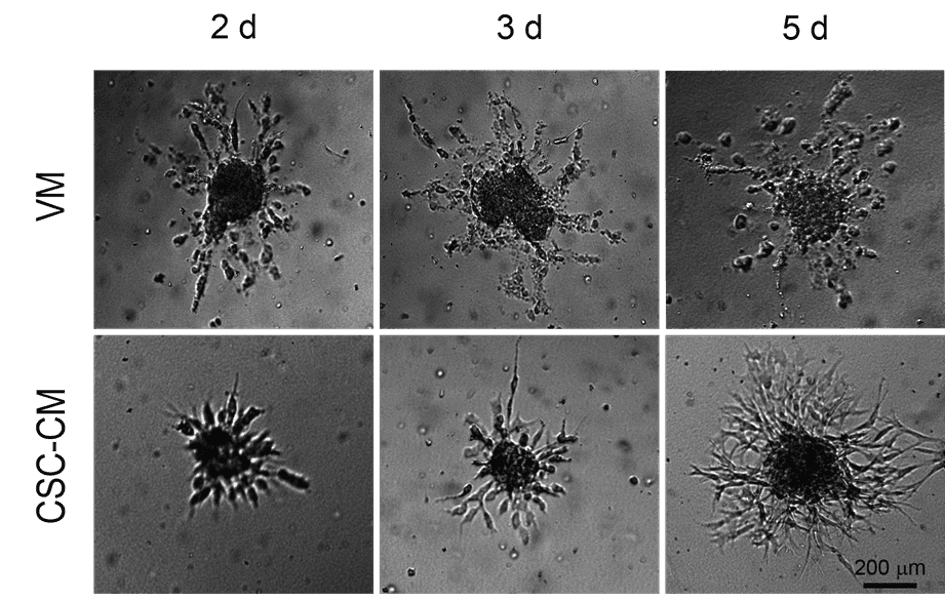
Figure 1
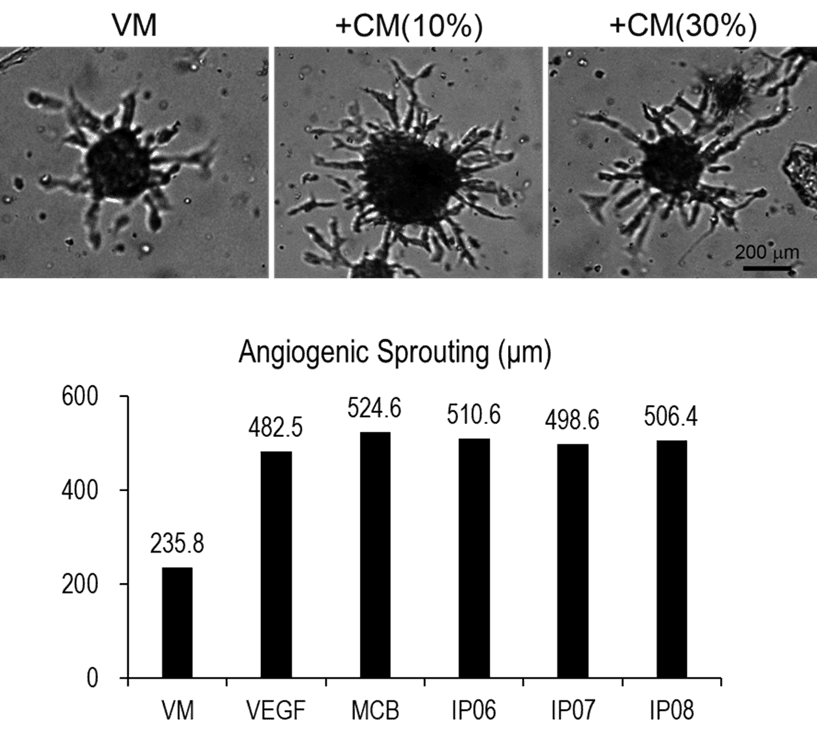
Figure 2
2.Induction of dermal fibroblast growth
Figure 3. The ability of HC02 to induce cell growth was demonstrated by the increase in cell density according to the concentration of HC02 added during the culture of dermal fibroblasts in human skin.
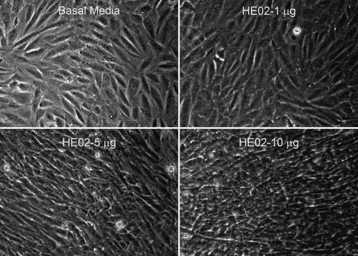
Figure 3
3.Regeneration of muscle fiber & Anti-inflammation
Decreased activity of caspase regulates apoptosis and inflammation.
Figure 4. In the Ischemic Hindlimb Mouse Model, administration of HC02 shows tissue/cell protective effects by inhibiting the activity of Caspase 3/7, an apoptosis-related protein that increases during muscle necrosis and damage.
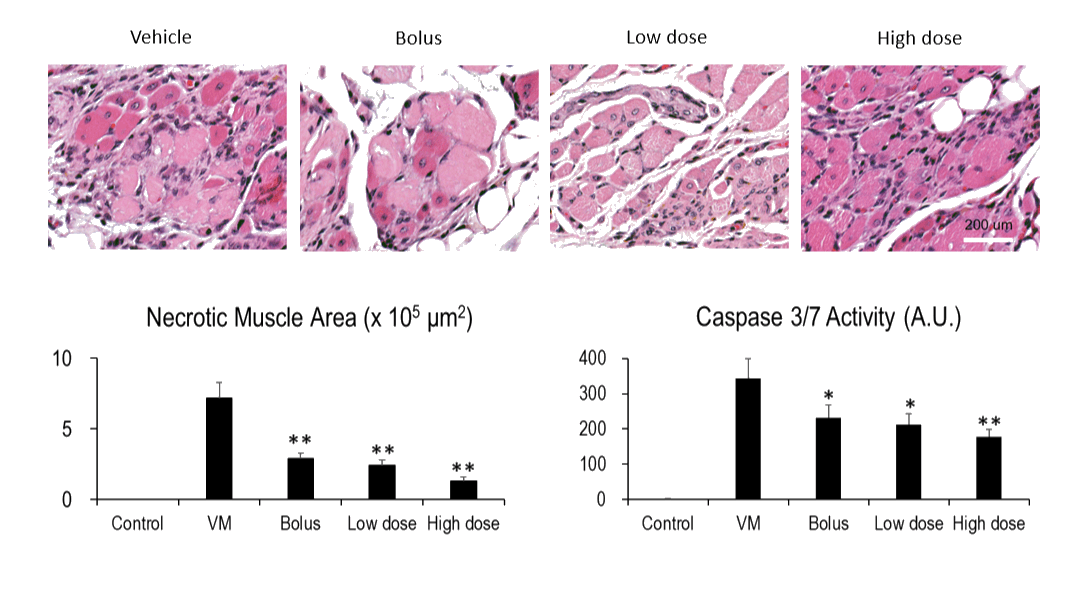
Figure 4